Health and Safety Policy for Landscapers Coney Hall
 This health and safety policy sets out the practical standards followed by landscapers in Coney Hall when carrying out outdoor work for domestic and commercial properties. It applies to every stage of a project, from site preparation and lifting materials to the use of tools, disposal of waste and final tidy-up. The aim is to protect employees, contractors, clients and members of the public while maintaining a reliable, professional service. Where work is carried out in busy neighbourhoods or on properties with limited access, extra care is taken to reduce disruption and keep pathways, driveways and shared areas clear. A safe working environment is considered part of the service, not an optional extra.
The company expects all workers to follow a simple principle: plan the task, assess the risks, then carry out the work in the safest practical way. This applies to routine maintenance, turf installation, hedge cutting, planting, garden clearance and rubbish removal. Risks can change throughout the day, so workers are encouraged to remain alert and to stop work if conditions become unsafe. A strong safety culture helps prevent injuries, damage to property and avoidable delays.
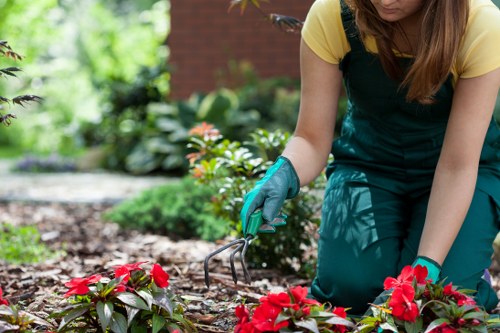 This policy also supports good housekeeping across all landscaping projects. Tools are stored correctly, waste is separated where practical, and work areas are kept neat throughout the job. This is especially important when dealing with garden rubbish, soil, branches, packaging and general site debris. By keeping work zones tidy, landscaping services in Coney Hall can reduce slips, trips and falls while making the site safer for everyone nearby.
Risk assessments are completed before work begins and reviewed if site conditions change. Common hazards include uneven ground, wet surfaces, low branches, hidden utilities, moving vehicles, sharp objects in overgrown areas and manual handling tasks. The assessment considers the scale of the job, the equipment needed and any vulnerable features of the property. When necessary, work is adjusted to suit the conditions rather than forcing a task to continue in an unsafe manner.
All employees must use equipment that is suitable, maintained and used in line with training and manufacturer instructions. This includes mowers, hedge cutters, strimmers, wheelbarrows, hand tools and vehicles used to transport waste or materials. Guards, safety switches and other protective features must remain in place. Damaged equipment is removed from service until inspected and repaired. Workers are expected to wear appropriate PPE, which may include gloves, eye protection, sturdy footwear, ear protection and high-visibility clothing where needed.
 Manual handling is a major concern in landscaping because many tasks involve lifting, carrying, pushing or dragging heavy items such as bags of soil, paving, branches and green waste. Workers should use team lifts where necessary, avoid twisting while lifting and seek mechanical assistance for awkward loads. Clear access routes help reduce strain and lower the risk of accidents. Good lifting practice is treated as essential, not optional, especially during clearance work and rubbish collection.
Training and supervision play a key role in maintaining safety. New staff receive instruction on site behaviour, hazard awareness, safe use of tools and emergency procedures. More experienced workers are responsible for setting a good example and correcting unsafe practices early. Where work takes place near roads, public footpaths or neighbouring properties, additional controls are used to manage pedestrian movement and prevent tools, stones or debris from leaving the site.
Weather conditions can affect the safety of every landscaping job. Heavy rain, strong winds, frost, heat and poor visibility can create hazards for workers and the public. Tasks may be delayed, rescheduled or adapted if conditions become unsuitable. Hot weather requires access to drinking water and regular rest breaks, while cold weather calls for suitable clothing and careful attention to slippery surfaces. The policy recognises that safe output is more important than rushing to finish a task.
Waste handling is managed with particular attention to safety and environmental responsibility. Green waste, broken materials, old fixtures and general rubbish are sorted where practical and removed in a controlled manner. Bags and containers are not overfilled, and sharp or hazardous items are isolated to prevent injury. This approach helps keep landscaper operations in Coney Hall efficient while supporting a clean finish on every job. When rubbish removal is part of the service, the team ensures that loading and transport are done safely and that no debris is left behind.
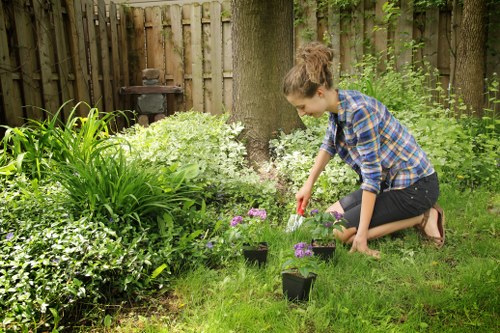 Emergency procedures are in place for incidents such as cuts, strains, equipment failure, property damage or contact with unknown substances. First aid supplies are kept available, and workers know how to report incidents promptly. If a serious hazard is discovered, the work area is made secure and the task paused until it is safe to continue. This includes situations involving unstable structures, exposed wires, gas smells or suspected asbestos.
Communication is central to safe working. Before starting a task, the team confirms responsibilities, access arrangements and any special instructions from the client. During the job, workers keep each other informed about changing risks, vehicle movements and loading activities. Clear communication helps reduce confusion and supports a smooth service, particularly on larger sites or when multiple tasks are completed on the same visit.
Records of inspections, incidents, maintenance and training are kept where appropriate so the business can monitor standards and improve performance over time. Landscaping safety in Coney Hall is treated as an ongoing commitment, with regular reviews to make sure the policy remains effective, practical and relevant to the work being done.
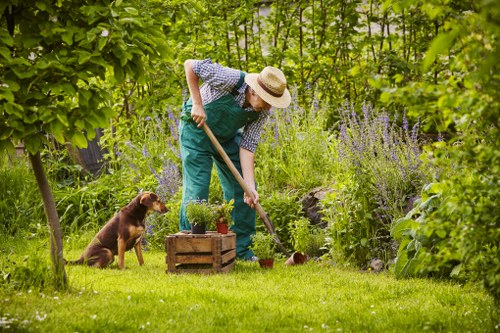 All workers are expected to cooperate with this policy, follow instructions, and report concerns without delay. Safe working habits, careful waste handling and respect for site conditions help protect people, property and equipment. By maintaining these standards, the company delivers a dependable landscaping service while keeping health and safety at the centre of every project.

